Friday, February 21, 2014

John David, NAB EVP of Radio - The NAB (National Association of Broadcasters)

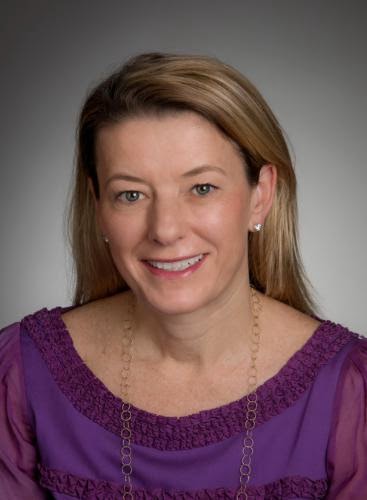
John David, NAB EVP of Radio 
By Joey Odorisio

John David


The NAB (National Association of Broadcasters) is a key trade organization for both radio and television broadcasters throughout the U.S. The organization is closely involved in advocacy for a wide variety of issues facing the industry today, as well as aiding in broadcast innovation and educating broadcasters as well.
           NAB EVP of Radio John David has been a part of the organization since 1984, when he joined the NAB Board of Directors, representing Kansas and Missouri. He spent 17 years as EVP of J.R. Broadcasting Company, as an owner and GM of multiple stations. He officially joined the NAB in 1989, serving in a variety of roles over the years, and becoming EVP of Radio in 1998. In a new conversation with FMQB, David discusses the multiple priorities the NAB is focused on in 2014, from the ongoing battle over the Performance Royalty to FM radio chip activation in mobile devices.

What is your role at the NAB and how does it affect radio stations around the country?
My responsibilities include liaison with the 35 member NAB Radio Board of Directors and the leadership of that board. I also oversee the convention programming for the NAB Show in Las Vegas and the Radio Show in the fall. Recognition for radio stations and personalities for NAB Member Radio Stations in the NAB Marconi Radio Awards and the NAB Crystal Radio Awards for exemplary community service also are administered by the Radio staff. My involvement also includes being a membership ambassador for service to NAB member stations and companies. Since I’m a believer in the mission of the NAB, I often communicate our agenda to non-member companies to seek their investment in becoming involved with our representation.
What are the NAB’s priorities for 2014?
Included, but not limited to, a fairer streaming rate and working with the music industry for a continued productive relationship. It’s a long-standing partnership that recognizes the promotional value of Radio stations that play the music that the record labels and artists want Radio to play and what listeners want to hear.
           NAB endorses the activation of chips in cell phones so information and entertainment is available to people who want to have access to their radio stations. We’re also active on advertising deductibility in making sure that advertisers can deduct their company advertising investments in the year it was broadcast. This is top of mind this week. We follow many more issues at the NAB every month.
What does the organization see as the most important issues facing radio currently?
In addition to what I mentioned in response to the previous question, we are also getting involved more in what’s in the vehicle dash. There’s also focus on AM revitalization from a technical and regulatory perspective.
Can you give some of your career background that led you to the NAB?
I was an owner/operator of radio stations for many years and served on the NAB Radio Board of Directors. So I have the perspective of a hands-on broadcaster inside the NAB. I made payroll, carried an advertiser client list, programmed radio stations and can even produce a log. I worked my way through college as a rock and roll jock. I started with the NAB in the government relations division with responsibility for grass roots lobbying, the political action committee and the state association liaison.
What is the latest update to the state of the Performance Royalty issue?
We have over 200 members of Congress who are with us on not imposing an over the air tax on radio broadcasters. We are very appreciative of the NAB member broadcasters all over the country who have communicated their personal perspective to their elected representatives.
What is the NAB’s position on royalty deals, a la Clear Channel’s agreements with Warner Bros., Glassnote, etc.?
It’s proven that the market place can work if it makes sense for the labels and the individual companies.
What are your thoughts on the roll-out thus far of the NextRadio system for FM chips in smartphones?
NAB was involved early on to assure that a standard was developed to allow companies to compete. There is no question that listeners should have access to their stations through the device that almost everyone has with them at all times. We hope that more broadcasters will continue to provide a more positive experience through digital delivery while helping listeners to not incur additional data charges by listening over the air.
What can the industry look forward to at the NAB Show in April and the NAB/RAB Radio Show in September?
The NAB Show is in April in Las Vegas. Both the NAB and RAB are producing a number of informative sessions for the convention. Plus, you won’t see more equipment and software for Radio anywhere else, but Las Vegas. Dates are April 5-10 with the exhibits opening on April 7. The Radio Luncheon will be on Tuesday, April 8 where we’ll induct Steve Harvey in to the NAB Broadcasting Hall of Fame and present 10 NAB Crystal Radio Awards to stations for exemplary community service.
           The Radio Show, produced by RAB and NAB will be in Indianapolis this September. We have a Radio Show Steering Committee that will guide the programming and sessions for that annual event. The dates are September 10-12.

[eQB Content By Joey Odorisio]

Friday, February 7, 2014

Artist Carrie Mae Weems Says Art Saved Her Life

Artist Carrie Mae Weems Says Art Saved Her Life, And Yours Too


Carrie Mae Weems, the first African American woman to have a solo show at New York City's Guggenheim museum and winner of the MacArthur Genius Grant, thinks art is really a shortcut to inner peace.
As she told Ebony:
Art is the one place we all turn to for solace. We turn to it constantly, whether you are listening to music, or pop in a film; you want to escape reality, and if you thinking deeply, you want to engage in art in a complex way. Art allows us to navigate the more complicated parts of our lives in a way that is more palpable. We don't go to the movies just to see a movie; we go for the experience. I'm very interested in the experience. Art has saved my life on a regular basis. I wanted to offer that experience to children, to enlist them, to show them the possibilities that are in the arts, to persuade them to pursue it for both their own personal salvation and for changing the way we are understood.

Monday, February 3, 2014

Live365 names Dennis Constantine as Director of Programming


Live365 Appoints Dennis Constantine Director of Programming


February 3, 2014

Dennis Constantine

Dennis Constantine takes over as Director of Programmer at Live365 after serving as consultant with the company since the fall 2013. This announcement follows the Live365 Executive Leadership Team additions in 2013 of Hong Lau, Chief Executive Officer, Bill Bungeroth, Vice President of Sales (a forty year veteran in the broadcasting industry) and Juliette Bouquerel, Director of Broadcast Services (bringing her 15 years of experience in branding & marketing to Live365).

"As more and more radio listening moves online, I'm thrilled to be part of the radio revolution,” said Constantine. “Live365 is fully involved in creating new products and improving the experience of radio listening! It's exciting to be part of the brain trust."

Live365, Inc. is a leader in internet broadcasting and the choice of over 5000 internet broadcasters since their launch in 1999.

Constantine is a lifelong broadcaster with decades of experience in broadcasting. He has programmed over 40 stations ranging from Pop, AC, Rock, Oldies, Alternative and AAA and has received award recognition from prestigious media organizations Billboard Magazine, Radio & Records and the National Association of Broadcasters.

With over 14 years with CBS Radio, Dennis has also worked for Cumulus Radio and Public Radio stations in New York, Philadelphia, Boston & Denver.

Saturday, February 1, 2014

Amanda Knox - Return To Sender?


MEMPHIS, TN (IFS) -- Will the United States Department of Justice force Amanda Knox to return to Italy?  It would be a terrible miscarriage of justice if this was enforced.  Double jeopardy is our law of the land, regardless of the outcome.  But, it appears that Italy's system of justice only deletes a verdict, then repeats it at their own choosing.  Then again, what does one expect for a country that sided with Hitler during WWII.  It seems that the "nuts" don't fall to far from the tree.

If Ms. Knox is not returned to Hi-Italy. . . what are they going to do?  Declare war on us?  I believe they did that once before.  It appears that did not workout to well for them at that time.  So to have Ms. Knox returned to Italy for some redundant charge that has been rendered, the US Government should take into consideration that a verdict has been given. The case if closed.  End of the story.

What a price to have hanging on one's head forever?

No one will really know the whole story.  It took over four and a half years to get to the verdict that got Ms. Knox back to the US.  It is obvious, that she is never going to win.  She is always going to be treated as guilty no matter what.

If the Italian people don't want to come to visit the United States, then good for them, it makes more room for other visitors.  As for American citizens visiting Italy. . . you better watch out, because you will be targets of abuse.  I say, lets all leave the place and let them kept their verdict, but you can't have Amanda!


Wednesday, January 22, 2014

Viacom Names Martha Riley As Senior Vice President Of Music Sales For Viacom Media Networks

Viacom Names Martha Riley As Senior Vice President Of Music Sales For Viacom Media Networks.   Riley will provide the strategic connection between Viacom's Music and Entertainment Ad Sales group and the Music and Logo Group brands

 By Mi2N


 Viacom Inc. promoted Martha Riley to Senior Vice President, Music Sales, with sales responsibility for the company's Music and Logo Group, which includes MTV, MTV2, mtvU, VH1, VH1 Classic, Palladia and Logo. Based in New York, Riley will report directly to Jeff Lucas, Head of Sales for Music and Entertainment at Viacom.

 In her new role, Riley will provide the strategic connection between Viacom's Music and Entertainment Ad Sales group and the Music and Logo Group brands it supports. She will work closely with channel leadership to drive ad sales strategy and products that are consistent with each brand, its content and its overall goals. Riley will foster collaboration among Ad Sales, Integrated Marketing, Programming, Scheduling and Digital to develop marketing solutions that leverage the company's creative and cross-platform capabilities in full to achieve client objectives.

 "Our Ad Sales team and its marketing solutions are at their best when they're fully aligned with the creative content of our brands across capabilities in full to achieve client objectives. "Our Ad Sales team and its marketing solutions are at their best when they're fully aligned with the creative content of our brands across every screen," said Lucas. "Martha is a big picture, innovative thinker who knows how to get the most out of our content for our clients in a way that resonates with our audiences."

 Riley is a twenty-year veteran of Viacom, and during that time she has worked extensively with the company's Music and Logo Group brands. Most recently, she served as Vice President of Sales for the Music Group, with responsibility for New York-based ad sales across MTV, MTV2, mtvU, VH1 and Logo. Earlier, Riley was Director of Sales for MTV2. She joined Viacom as a Sales Planner in 1993. Related News from Mi2N: » Viacom Names Martha Riley As Senior Vice President Of Music Sales For Viacom Media Networks

Saturday, January 18, 2014

If you think cable TV sucks, just wait

Does This Ruling Mean The End of the Internet? Maybe.


If you think cable TV sucks, just wait. Craig Aaron, president and CEO of Free Press, says the end of the Internet as we know it is coming—unless we do something about that.
On Tuesday, the federal appeals court in Washington, D.C., trashed the Federal Communications Commission’s “Open Internet” rules.
Translation: The judges just killed Net Neutrality.
Less-wonky translation: Verizon, AT&T, Time Warner Cable or whoever provides your Internet connection can now block, slow or otherwise mess with websites, apps and other services.
And the FCC—the agency that’s supposed to protect Internet users and oversee communications networks—can’t do anything about it.
Well, they can do one thing—which I’ll explain in a second.
But first …
What did the court actually say?
Let’s be clear: The court didn’t rule against Net Neutrality —  that fundamental principle which ensures you can go wherever, browse whenever, and download whatever you want when you go online.
The court just invalidated the way the FCC tried to make Net Neutrality rules in a 2010 order. The judges rejected the legal framework used by the FCC and said the agency currently lacks the authority to implement and to enforce these rules.
Indeed, the court specifically stated that its “task as a reviewing court is not to assess the wisdom of the Open Internet Order regulations, but rather to determine whether the Commission has demonstrated that the regulations fall within the scope of its statutory grant of authority.”
So how did we get into this mess?
The reason the FCC’s authority to regulate broadband didn’t pass muster in court is because, under the Bush administration, the FCC abdicated its authority. At the urging of phone and cable lobbyists, the agency changed the way it treated broadband under the law. That was a huge mistake.
“We can still have Net Neutrality in America—but the FCC must reclaim its legal authority immediately.”
And so when the FCC tried to stop Comcast from blocking lawful file-sharing back in 2008, Comcast sued them claiming the agency didn’t have the authority. And Comcast won.
And when the FCC tried to implement watered-down but not completely worthless Net Neutrality rules in 2010, Verizon sued claiming they still lacked the authority. And Verizon won yesterday.
The silver lining is that there’s nothing in the court’s decision that prevents the FCC from reversing its earlier misguided decisions and treating broadband under the law as the “telecommunications service” it so obviously is.
Well, there’s nothing stopping the FCC but a lack of political will and the lobbying might of the telecom industry (which spends more to influence Washington than anybody outside the drug companies).
But both Tuesday’s decision and a prior decision by the Supreme Court in the 2005 Brand X case clearly establish that the FCC must “reclassify broadband” if it wishes to have any lasting ability to prohibit ISPs from blocking websites or discriminating against apps.
We can still have Net Neutrality in America—but the FCC must reclaim its legal authority immediately.
What if the FCC doesn’t act?
If you think cable TV sucks, just wait. ISPs like Time Warner Cable, AT&T and Verizon want to take the worst aspects of the cable system and impose them on the Internet.
Expect Internet blackouts that extend far beyond the popular content vendors, as smaller websites are caught in the crossfire. Tweets, emails and texts will be mysteriously delayed or dropped. Videos will load slowly, if at all. Websites will work fine one minute and freeze the next.
Your ISP will claim it’s not their fault, and you’ll have no idea who is to blame. You also won’t be able to vote with your feet or your wallet, because there’s no competition in broadband, and all the big ISPs will be playing this game.
You see, ISPs hate the idea that they’re nothing more than providers of “dumb pipes.” Now that they are free from any legal restraints, the ISPs will try to get Internet companies to pay extra tolls—and threaten to block or delay them if they don’t. Exclusive deals could become the norm, with AT&T exclusively bringing you Netflix, while Time Warner Cable is the sole source for YouTube.
Is that all?
Net Neutrality lowers the barriers of entry for entrepreneurs, startups and small businesses by ensuring the Web is a fair and level playing field. It’s because of Net Neutrality that small businesses and innovators have been able to thrive on the Internet. They use the Internet to reach new customers and showcase their goods, applications and services.
Without Net Neutrality, the next Google being built in a garage somewhere will never get off the ground.
And it gets worse. The court’s decision and the FCC’s bungling have put more in jeopardy than just Net Neutrality.
For example, the ruling threatens FCC efforts to modernize the universal service program to ensure that rural and low-income users are able to access affordable broadband services. We could see the progress made toward closing the digital divide come to a full stop.
And if privacy is your main concern, this ruling frees ISPs to monitor everything you do and say online—and sell that information to the highest bidder. ISPs have something that companies like Google and Facebook don’t: direct control over your connections to the Internet and the devices you use to connect to it.
So if this decision stands, it won’t be long before your ISP requires you to connect via their list of approved devices and then uses those devices to literally watch you. Forget about encryption—your ISP could require the key as condition of using its network.
Is there any hope?
Yes. The one thing, that aforementioned silver lining, is that the FCC still has the power and ability to turn this all around.
New FCC Chairman Tom Wheeler recently stated that the FCC must be able to protect broadband users and preserve the Internet’s fundamental open architecture. Now he has no other choice but to reassert the FCC’s clear authority over our nation’s communications infrastructure.
Will he do it? Not without a lot of political pressure—enough political pressure to counteract the onslaught of industry lobbyists (and hired guns and sketchy front groups) about to descend on his office.
But we’ve seen throughout the fight over Net Neutrality, the massive mobilization to stop the SOPA/PIPA Web censorship bills, and the public outcry against unchecked NSA surveillance that when millions of Internet users speak out, Washington will pay attention
So is this the end of the Internet? Only if we let it be.
Editor's Note: An earlier version of this post mentioned Comcast in the context of this week's court ruling. However, under the terms of its merger with NBC, Comcast must abide by the Open Internet rules regardless of the court decision until 2018. The author regrets the error.

Friday, January 17, 2014

California woman faces trial for wearing Google Glass while driving

California woman faces trial for wearing Google Glass while driving


Reuters 
SAN DIEGO (Reuters) - A woman ticketed for driving while wearing Google Glass, a tiny computer mounted on an eyeglass frame, is scheduled to appear in a Southern California traffic court on Thursday, in a case that raises new questions about distracted driving. Technology entrepreneur Cecilia Abadie, one of thousands of people testing the device for Google Inc, was stopped for speeding in October by the California Highway Patrol on Interstate 15 in San Diego.

The officer then gave her a second citation for using a "monitor" in her car while driving, according to the Highway Patrol. Abadie quickly posted the news of her ticket on social media. "A cop just stopped me and gave me a ticket for wearing Google Glass while driving!" she wrote on the Google Plus social networking site. Abadie is apparently the first person cited for wearing Google Glass while driving. The device, which projects a small screen in the corner of a wearer's eye, is expected to become a major catalyst for what many believe to be the next big trend in mobile, wearable computing devices.

 Developers are already crafting apps to try to position themselves if the devices, which can be voice- or motion-activated, prove popular with consumers. Google Glass is not yet available for sale to the general public, although the company is testing the product with the help of thousands of so-called "Explorers" who have been given early access to the technology. At the end of December, Google made the device available to select developers, and it is expected to come to market later this year.

 Abadie is scheduled to appear in traffic court in San Diego on Thursday, where a trial will be held in front of a judge. (Editing by Sharon Bernstein and Ken Wills)

Blog Archive